
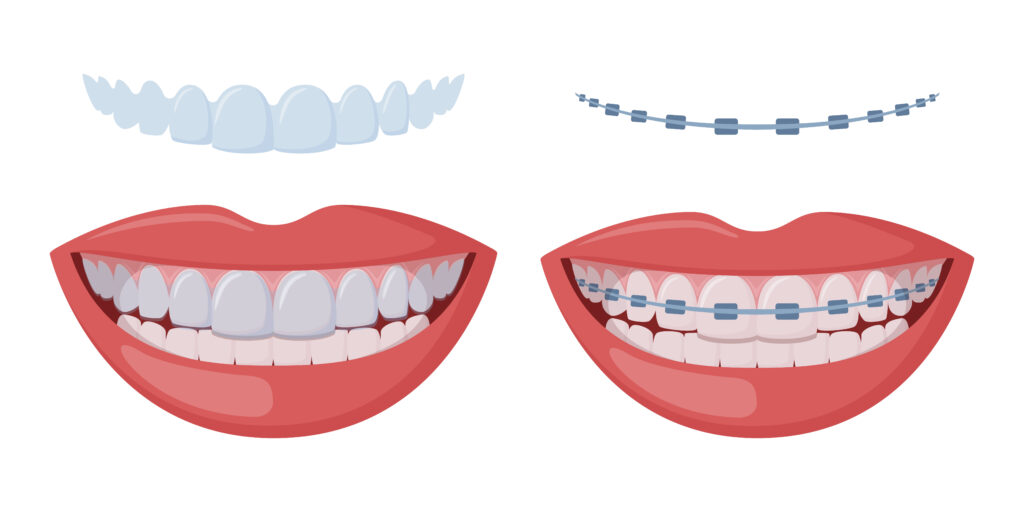
Are you thinking about straightening your teeth? Many people wonder about braces vs aligners – what’s better for their smile. Both options can help fix crooked teeth, but they work in different ways. In this guide, you will learn about braces, aligners, and how to choose the right treatment. Let’s explore the pros, cons, costs, and results of each option so you can make an informed choice.
What Are Braces?
Braces are a common way to straighten teeth. They use metal or ceramic brackets that attach to your teeth. Wires connect these brackets and gently move your teeth into place over time. Usually, an orthodontist adjusts the wires every few weeks. Braces can fix many dental problems, such as crowded teeth, gaps, or bite issues. According to the American Association of Orthodontists, braces are safe and effective for children, teens, and adults.
What Are Aligners?
Aligners are clear, removable trays made of plastic. They fit snugly over your teeth and slowly shift them into the right position. You get a new set of aligners every one to two weeks. Unlike braces, you can take aligners out to eat, brush, or floss. Many people like aligners because they are almost invisible. Brands like Invisalign and ClearCorrect are popular choices for aligner treatment.
Key Differences Between Braces and Aligners
Pros and Cons of Braces
Pros and Cons of Aligners
Effectiveness and Results
Both braces and aligners can straighten teeth well. However, braces are often better for severe or complex dental issues. Aligners work best for mild to moderate problems. For example, if you have crowded teeth or a big gap, braces may be more effective. Still, many people get great results with aligners. According to studies in dental journals, both treatments can give you a healthy, straight smile when used correctly.
Cost Comparison
Cost is important for many families. Braces usually cost between $3,000 and $7,000. Aligners can range from $3,000 to $8,000, depending on your needs and location. Sometimes, dental insurance covers part of the cost. In addition, some orthodontists offer payment plans. Always ask about total costs before starting treatment.
Comfort and Aesthetics
Many people choose aligners because they look better and feel more comfortable. Since aligners are clear, most people will not notice them. Braces, on the other hand, are more visible. However, some people get used to braces quickly. Both options may cause mild discomfort at first, but this usually goes away after a few days.
Maintenance and Oral Hygiene
Good oral hygiene is important during orthodontic treatment. With braces, you must brush and floss carefully to avoid plaque and cavities. Special brushes and floss threaders can help. With aligners, you can remove the trays to brush and floss as usual. However, you must clean the aligners daily to prevent stains and odors. Either way, regular dental checkups are important.
Who Should Choose Braces or Aligners?
Choosing between braces and aligners depends on your needs and lifestyle. For example, braces are better for children, teens, or adults with complex dental issues. Aligners are a good choice for people who want a discreet look and have mild to moderate problems. However, you must wear aligners as directed for the best results. Your orthodontist can help you decide which option fits your smile and budget.
Frequently Asked Questions (FAQs)
In summary, both braces and aligners can give you a straight, healthy smile. Each has its own benefits and challenges. For the best advice, consult a certified orthodontist to find out which option is best for your smile.