
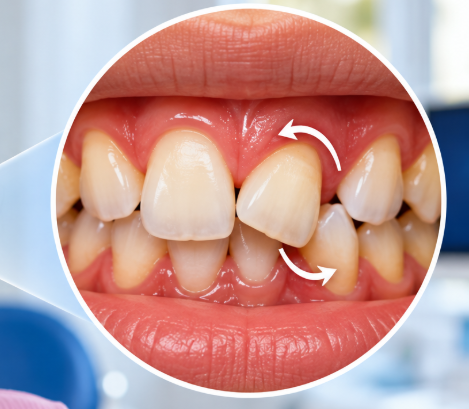
What Is Tooth Rotation?
Tooth rotation happens when a tooth turns or twists out of its normal position. Usually, teeth should line up straight in the mouth. However, sometimes a tooth may rotate or turn sideways. This is called tooth rotation. Dentists often see this problem in children and adults. Tooth rotation can affect one or more teeth. Sometimes, it makes cleaning harder and can change your smile. According to dental experts, early treatment can help prevent more problems. Tooth rotation is a common dental issue and can be fixed with the right care.
Common Causes of Tooth Rotation
Many factors can lead to tooth rotation. For example, some people are born with extra space or not enough space in their mouths. This can cause teeth to move or twist. In addition, habits and other issues may also play a role. Below are some common causes of tooth rotation:
Because many causes are out of your control, regular dental checkups are important.
Recognizing Symptoms of Tooth Rotation
Tooth rotation can be easy to spot. Yet, sometimes the signs are subtle. Knowing what to look for can help you get help sooner. Common symptoms include:
For many people, tooth rotation does not cause pain. However, it can affect how you chew or speak. Over time, rotated teeth may lead to gum problems or tooth decay. Therefore, noticing these signs early can make treatment easier.
How Tooth Rotation Is Diagnosed
Dentists use several methods to diagnose tooth rotation. First, they will look at your teeth during a dental exam. They may also ask about your dental history and habits. Next, X-rays or dental scans can show how much a tooth has rotated. Sometimes, dentists use dental molds to study your bite. Because early diagnosis helps prevent more problems, it is important to see your dentist regularly. The Centers for Disease Control and Prevention (CDC) and dental journals recommend routine dental visits for all ages.
Treatment Options for Tooth Rotation
There are many ways to fix rotated teeth. The best treatment depends on your age, the cause, and how much the tooth has turned. Dentists will discuss the best plan for you. Common rotated teeth treatments include:
Because each case is different, your dentist will create a plan just for you. Early treatment often leads to better results and a healthier smile.
Prevention and Oral Care Tips for Tooth Rotation
While not all cases can be prevented, good oral care can help. For example, regular dental visits let your dentist catch problems early. Here are some tips to lower your risk of tooth rotation:
Because prevention is easier than treatment, these steps can help protect your teeth. The World Health Organization (WHO) and dental experts agree that early care leads to better dental health.